
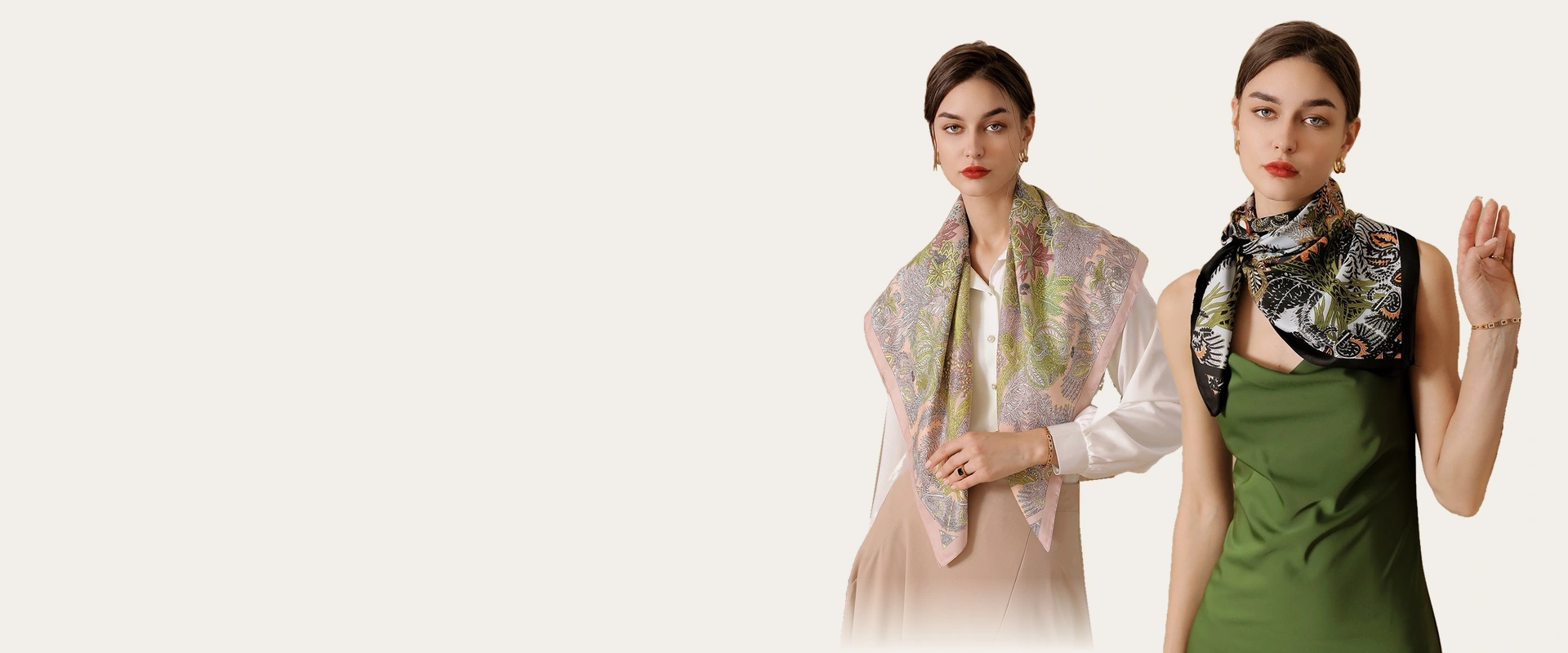
Custom Scarves for Your Brand
Explore fabrics and styles for your next scarf collection.
- ✓ Four Scarf Formats
- ✓ Fabric Options

Plan the Range Before Choosing the Fabric
A retail accessory, a branded gift and a coordinated staff scarf can call for different specifications. Start with the intended wearer, season, selling price or project budget. We can then review the proposed fabric and style together, including which details should stay consistent across the range.
Compare Fabrics Against Your Project Brief
Begin with a swatch and the effect you want. Our material options include silk and silk blends with cotton, wool or regenerated fibers. Other compositions require a sourcing and suitability review before we confirm availability.

1. Composition
Specify the fibers and blend ratio you want, or send a reference for review. A fabric name alone does not define the finished specification.

2. Feel
Describe the feel you want against the skin. Compare physical swatches rather than relying on a photograph or a broad description such as soft.

3. Weight and Body
Decide whether the scarf should feel light, hold a fold or have more body. Assess this in the selected format, not just as a small swatch.

4. Coverage
Identify how much coverage the wearer needs. Check the fabric over the intended clothing and in the layers used when wrapping or folding it.

5. Design Appearance
Review texture, color and motif visibility together. A change of fabric calls for a fresh assessment of how your design will look.

6. Target Cost
Provide a budget together with the order breakdown. Compare material, size, decoration and packaging choices before fixing the final specification.
Four Formats for Different Ways of Wearing
Build the range around square, long, shawl or skinny shapes. Choose the proportions and intended use first, then review a suitable fabric for each style.

Square Scarves

Long Scarves

Shawls and Wraps

Skinny Scarves

Give Each Shape a Clear Wearing Purpose
A useful style brief explains how the scarf will be worn. This gives the dimensions a purpose and helps avoid developing several sizes that serve the same role.
- Folded or Tied
For square scarves, show the intended fold or knot in a reference image. Note which parts of the design should remain visible. - Wrapped or Draped
For long scarves, describe the wrap and the desired length of the hanging ends. Check the proportions on a worn sample. - Across the Shoulders
For shawls, identify the coverage you want over the shoulders and upper body. Review the width with the intended outfit. - As a Narrow Accent
For skinny styles, specify whether the scarf is worn at the neck or used as an accessory. Show the tie and the visible ends.
Keep a Shared Design Identity Across the Range
Create a short design brief that distinguishes the elements every scarf must share from the details that can change. Different shapes and fabrics need their own approvals even when they belong to one collection.
- Shared Elements
Identify the brand colors, motif family and logo version that tie the range together. Supply the same master references for every style. - Style Variations
Assign each format its own design code. Record which artwork, colors and fabric belong to that version so they cannot be mixed during development. - Color Priorities
State which colors are critical to the project. Compare proposed samples side by side and agree the references for each fabric. - Approval Versions
Name the approved files clearly. Record revisions in one style list so a superseded layout is not treated as the production version.


Choose the Details That Matter to Your Budget
Review the edge finish and decoration with the chosen fabric, then decide where the budget adds the most value. Keep a separate specification for each version you want quoted.
- Edge Finish
Show the edge appearance you prefer. Confirm the proposed construction and thread color on a sample of the selected fabric. - Brand Mark
Decide whether the main identity comes from the overall design, a visible logo or a label. Confirm decoration suitability for the fabric and placement. - Packaging Level
Identify whether the scarf needs individual bagging or a gift presentation. Include any folded-size or presentation requirements in the quotation brief. - Alternative Versions
If comparing costs, change one specification at a time. Keep the format and quantity clear so you can see what each option changes.
Complete the Scarf with Your Brand Details
Plan the product label, hangtag and packaging together. Each serves a different purpose when the scarf reaches your customer.

Product Labels
Use brand and care labels with agreed wording and placement. Fiber content and care information must match the approved fabric and finished product.
Review Labels
Hangtags
Provide your hangtag artwork and attachment preference. Check that the tag identifies the right style and does not obscure the intended presentation.
Review Hangtags
Individual Packaging
Choose from applicable bag or box options and submit the branding requirements. Confirm the folded scarf, label visibility and package fit as one finished unit.
Review Packaging
Approve a Sample for Every Distinct Specification
A sample in one fabric does not approve another fabric automatically. For a range with several materials or formats, agree which versions need separate samples. Check the feel, wearing proportions, design appearance, edge finish and packed presentation, then record the approved specification for each style before production.
Tell Us What Your Scarf Range Needs to Do
Create custom scarves for your next collection, branded gift or staff uniform.
Request a Project ReviewLuxoSilk Custom Scarves FAQ
Resolve material choices and range planning before committing to a sample specification.